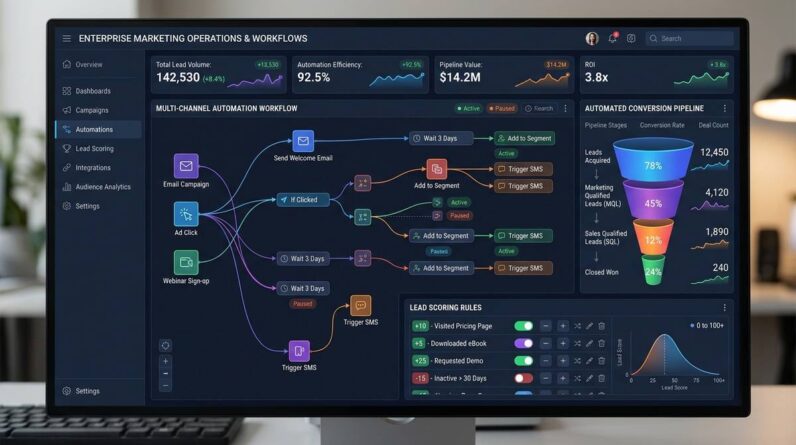
Every business on earth desires the same ultimate outcome: a steady, predictable influx of loyal customers who buy repeatedly, leave glowing reviews, and enthusiastically refer their colleagues.
Yet, when you look at how the average business attempts to acquire new customers, their approach resembles an aggressive stranger walking up to someone on a busy street corner and immediately demanding marriage.
They launch paid advertisements targeting cold audiences with blunt, high-friction sales pitches: “Buy our product right now for twenty percent off!”
They send automated, impersonal cold outreach messages on LinkedIn demanding thirty minutes of an executive time before demonstrating a shred of contextual empathy.
When ninety-nine percent of those cold prospects inevitably ignore the pitch, marketing leaders blame the advertising platform, criticize the sales team, or complain that modern buyers have no attention span.
The problem is not the platform, and the problem is not the buyer attention span.
The problem is a fundamental failure to respect the emotional, cognitive, and logical stages of the Customer Journey.
Human beings do not wake up in the morning eager to hand their hard-earned money to a business they discovered thirty seconds earlier. Trust is not an instantaneous event; trust is an earned emotional state built across a series of structured, high-value micro-interactions.
If you desire to build an enduring, highly profitable commercial growth engine, you must stop treating sales like a transaction and start treating customer acquisition like an intentional, multi-stage relationship.
You must map out every psychological touchpoint: guiding a complete stranger from initial problem awareness, through nuanced consideration, into confident decision-making, and ultimately transforming them into an evangelical brand advocate.
In this comprehensive marketing masterclass, we will deconstruct the complete customer journey architecture, examine the five stages of buyer evolution, identify critical touchpoint friction leaks, and build an automated system to turn complete strangers into passionate, lifelong customers.
The Psychological Mechanics of the Modern Buyer Journey
To construct a journey that converts, you must first understand the fundamental shift in buyer behavior that defines the modern commercial landscape in 2026.
In decades past, companies controlled access to information. If a consumer or corporate buyer wanted to understand a product features, pricing, or industry benchmarks, they had no choice but to speak directly with a sales representative. The sales rep held information monopoly.
Today, that dynamic is completely inverted.
Buyers now conduct over seventy percent of their research independently before ever filling out a contact form, requesting a demo, or speaking with a human representative:
- They read independent third-party software reviews on G2, Capterra, and Trustpilot.
- They poll their peers in private Slack communities, Discord channels, and LinkedIn groups.
- They watch unboxing videos, consume educational podcasts, and analyze technical teardowns.
- They compare competitor pricing tiers and study transparent documentation on your website.
By the time a prospect formally enters your sales pipeline, their core beliefs and buying criteria have already been shaped.
If your marketing strategy exists only at the final moment of purchase, you are invisible during the vast majority of the decision-making process.
Your job as an elite marketer is to meet prospective buyers at the very beginning of their cognitive awakening, walking alongside them as an authoritative, empathetic guide through every step of their evaluation.
Stage 1: The Awareness Phase: From Unconscious Pain to Problem Definition
At the beginning of the journey, your prospective customer does not know who you are, what your company sells, or why they should care.
More importantly, they often do not even understand the root cause of their own frustration.
They know only that they are experiencing uncomfortable friction in their daily life or business operations:
- An e-commerce business owner notices their warehouse fulfillment costs are eroding profits, but they do not know whether the culprit is poor inventory software, inefficient labor workflows, or carrier surcharges.
- A busy professional feels chronically exhausted every afternoon, but they do not know whether the cause is poor sleep hygiene, micronutrient deficiencies, or chronic workplace burnout.
If you pitch your product at this stage, the prospect will instantly tune you out because they cannot connect your solution to their undefined problem.
The Awareness Mission: Masterful Problem Articulation
Your objective in the Awareness Phase is not to sell your product. Your objective is to articulate the customer pain with such nuance, accuracy, and emotional empathy that the prospect experiences an instant revelation: “This company understands my dilemma better than I do.”
Key Awareness Assets:
- Thought-Leadership Content: In-depth blog essays, documentary-style videos, and industry podcast interviews breaking down macroeconomic shifts and operational bottlenecks.
- Diagnostic Checklists and Quizzes: Interactive self-assessment tools allowing prospects to evaluate their current performance benchmarks against industry peers.
- Educational Infographics: Visual breakdowns illustrating the hidden financial and operational costs of unresolved problems.
When you help a prospect clearly diagnose their pain, you earn immediate intellectual authority and become the natural partner they turn to for the solution.
Stage 2: The Consideration Phase: Evaluating Methodologies and Frameworks
Once a prospective customer clearly understands their problem, they transition into the Consideration Phase.
In this stage, the buyer is actively researching different methodologies, frameworks, and categories of solutions:
- The e-commerce owner asks: “Should we hire more warehouse employees, outsource our fulfillment to a third-party logistics provider, or invest in automated robotics software?”
- The exhausted professional asks: “Should I purchase an expensive wearable sleep tracker, hire a personal nutritional coach, or restructure my evening digital habits?”
Notice that the buyer is still not choosing between specific vendors; they are choosing between competing categories of action.
If you jump straight to comparing your company features against Competitor X, you miss the mark. You must first convince the buyer that your overarching methodology is the superior strategic path.
The Consideration Mission: Strategic Category Elevation
Your goal during consideration is to educate the buyer on the pros, cons, and realistic trade-offs of each broad approach, positioning your methodology as the most durable, cost-effective, and future-proof choice.
Key Consideration Assets:
- Comprehensive Buyer Guides: Definitive white papers comparing in-house execution versus outsourced partnerships with transparent cost-benefit matrices.
- Look-Over-My-Shoulder Video Breakdowns: Tactical masterclasses demonstrating the step-by-step implementation of modern frameworks.
- Unfiltered Case Studies: Honest, highly detailed narratives detailing how similar individuals or organizations evaluated their options, overcame initial skepticism, and selected a path forward.
By acting as an objective, educational consultant rather than a pushy salesperson, you establish unshakeable credibility that competitors cannot match.
Stage 3: The Decision Phase: De-Risking the Purchase
The prospect has accepted that your category of solution is correct. They are now standing at the precipice of commercial transaction: deciding whether to invest in your specific offering or choose an alternative vendor.
This is the moment of peak psychological friction.
Even when a customer desperately wants your solution, their brain Reptilian survival mechanism floods their nervous system with acute risk aversion:
- “What if this platform is too difficult for our staff to learn?”
- “What if this software fails to deliver the promised return on investment and makes me look incompetent in front of my board of directors?”
- “What if there are hidden fees and lengthy contracts that trap our cash flow?”
Prospects do not fail to buy because they lack desire; prospects fail to buy because perceived risk outweighs perceived reward.
The Decision Mission: Total Risk Elimination and Proof Stacking
Your objective in the Decision Phase is to systematically dismantle every perceived risk, leaving the customer feeling completely safe, supported, and confident.
Key Decision Assets:
- Frictionless Trial Experiences: Interactive product sandboxes, free pilots, or low-cost introductory audits that allow buyers to test real-world functionality before signing large contracts.
- Ironclad Guarantees: Bold risk-reversal policies, including thirty-day money-back satisfaction guarantees, performance milestones, or service level agreements.
- Specific Proof Points and Testimonials: Verifiable customer video interviews, audited ROI metrics, security compliance certifications, and enterprise client rosters.
- Clear Implementation Roadmaps: Detailed thirty-day onboarding schedules showing exactly who will manage setup, how data will migrate, and when the first measurable business result will occur.
When you eliminate perceived risk, purchasing ceases to be a terrifying leap into the unknown and becomes an effortless, logical next step.
Stage 4: The Delivery and Retention Phase: Winning the Second Sale
In traditional transactional marketing, the business celebrates the moment a customer credit card clears, ringing a sales bell and immediately turning its attention back to hunting new leads.
This mindset is commercially disastrous.
In modern unit economics, customer acquisition cost is frequently so high that businesses make negligible profit, or even lose money, on the initial transaction. Real, exponential enterprise value is generated through repeat purchases, expansion revenue, subscription renewals, and high customer lifetime value.
The journey does not end when a customer buys; that is where the real relationship begins.
The Delivery Mission: Time-to-Value Acceleration
The first ninety days post-purchase dictate whether a customer will renew or churn. If a customer experiences confusion, delayed onboarding, or buyer remorse during their first week, their confidence collapses.
You must engineer an onboarding experience that delivers a fast, undeniable “Quick Win” within the first forty-eight hours:
- Dedicated Welcome Sequences: Automated, highly personalized video messages from customer success specialists walking the client through their immediate next three actions.
- Step-by-Step Training Portals: Bite-sized, five-minute video walkthroughs guiding users through initial account setup without overwhelming technical jargon.
- Proactive Check-In Milestones: Scheduled milestone audits at day seven, day thirty, and day sixty to review performance metrics, resolve emerging bottlenecks, and ensure the customer is actively realizing value.
When you delight customers during delivery, you transform buyers into loyal partners who view your service as an indispensable utility.
Stage 5: The Advocacy Phase: Activating the Referral Engine
The ultimate zenith of the customer journey is Advocacy: turning satisfied clients into an unpaid, highly passionate sales force for your brand.
A recommendation from a trusted peer carries ten times more persuasive power than the most brilliant advertising campaign ever conceived. Yet, most businesses never formally activate their advocacy potential. They assume that if customers are happy, they will naturally tell their friends.
Hope is not a marketing strategy. You must build structured mechanisms that encourage, celebrate, and reward customer advocacy.
The Advocacy Mission: Empowering Customer Evangelism
Turn happy customers into brand ambassadors through intentional advocacy loops:
- Frictionless Referral Programs: Provide clients with unique sharing links, offering two-sided rewards (such as service credits, hardware upgrades, or exclusive mastermind access) for every successful referral they introduce.
- Co-Marketing Opportunities: Invite top clients to co-author case studies, appear as featured guests on your corporate podcast, or speak alongside your leadership team at industry conferences. Celebrating your customer success elevates their professional profile while showcasing your impact.
- Private Community Access: Invite your best clients into an exclusive VIP advisory council where they can network with fellow high-performing peers, test beta features before public release, and provide direct feedback to your product roadmap.
When your customers feel seen, appreciated, and invested in your mission, they become fierce defenders of your brand, creating an organic growth loop that compounds year after year.
The 4 Critical Friction Leaks That Sabotage the Journey
As you map out your customer journey, watch out for these four common operational bottlenecks that quietly destroy conversion rates:
1. The Channel Disconnect
Marketing promises one experience in advertising, but the sales team pitches something completely different on discovery calls, and the customer success team uses contradictory onboarding terminology. Ensure brand messaging, value propositions, and tone of voice remain seamless across all departmental handoffs.
2. Information Gatekeeping
Forcing prospective buyers to book a forty-five-minute call with an aggressive sales rep just to discover basic software pricing or see a demo creates immense frustration. Respect the autonomy of modern buyers by providing transparent baseline pricing, clear feature breakdowns, and recorded product tours directly on your website.
3. Sluggish Speed-to-Lead
When an inbound prospect submits a contact form on your website, their buying intent is at its absolute peak. Research shows that responding within five minutes increases lead qualification rates by over four hundred percent compared to responding thirty minutes later. Automate instant scheduling calendars and rapid-routing alerts to connect with hot leads immediately.
4. Post-Purchase Silence
After the excitement of signing a contract, the customer hears nothing from the company for ten days while waiting for account activation. Eliminate this dead zone with continuous, transparent communication and automated progress trackers.
A Practical Audit Checklist: How to Map Your Journey Today
To optimize your customer journey this week, execute this four-step diagnostic exercise:
- Conduct an Objective Secret-Shopper Audit: Submit a lead inquiry on your own website using a personal email address. Note the exact response time, test the clarity of sales communications, and experience your onboarding workflow as a total stranger.
- Interview 5 Best and 5 Churned Customers: Ask your most loyal buyers what specific piece of content convinced them to choose you. Ask churned customers exactly where they felt confused, neglected, or frustrated during their lifecycle.
- Build a Visual Touchpoint Matrix: Chart every email, advertisement, sales script, invoice, and support interaction on a digital whiteboard. Identify every gap where a prospect is left without clear guidance on what to do next.
- Eliminate 3 Unnecessary Hurdles: Remove redundant form fields from your lead capture forms, streamline your calendar booking flow, and add an automated onboarding welcome video to your thank-you page.
Conclusion: Empathy Is the Ultimate Commercial Advantage
Marketing technology, algorithmic platforms, and automation tools will continue to evolve at blinding speed.
However, the fundamental psychological truths of human nature remain completely unchanged.
People buy from businesses that understand their pain, respect their intelligence, protect them from risk, and treat them with genuine care across every single touchpoint.
Stop searching for clever hacks, manipulative pressure tactics, and transactional shortcuts.
Step into the shoes of your prospective buyer. Map their journey with empathy and precision. Deliver masterclass education at every step, and construct an experience so seamless, valuable, and rewarding that strangers cannot help but become loyal, lifelong customers.