The Growth Paradox Facing Small Businesses
There is an old, somewhat painful proverb in the entrepreneurial world: “Without sales, your business isn’t a business—it’s an expensive hobby.”
When you launch a business, enthusiasm runs sky-high. You have created an exceptional product, perfected your service delivery, built a clean website, and opened your doors to the world. Then comes the deafening silence. You post on social media to the sound of crickets, tell your immediate family members, hand out a few business cards, and wonder why the phone isn’t ringing off the hook.
Getting those first 10, 50, or 500 paying customers is consistently the most difficult phase of entrepreneurship.
Why? Because enterprise corporations with multi-million dollar venture capital backing can afford to burn cash on expensive billboard campaigns, celebrity endorsements, and bloated paid ad budgets. Small businesses do not have that luxury. Every dollar and hour you invest in customer acquisition must return measurable, reliable revenue.
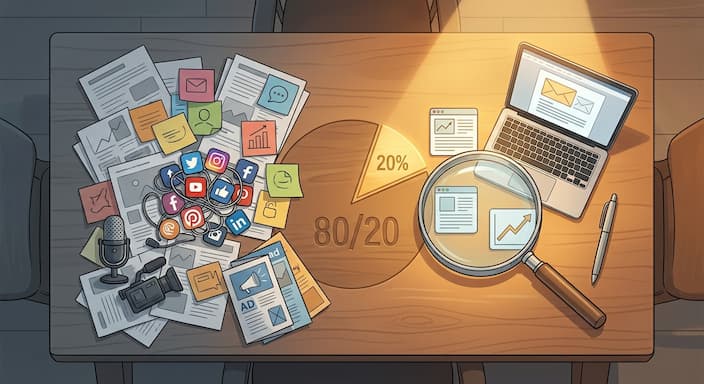
The mistake most business owners make is attempting to do everything at once. They try TikTok, start a podcast, send cold direct messages on LinkedIn, print flyers, sponsor a local sports team, and run Google Ads—all with disjointed effort and zero tracking. Within three months, they are completely burnt out, broke, and no closer to knowing what actually moves the needle.
Customer acquisition is not about doing everything; it is about finding the two or three channels that work exceptionally well for your specific business model, doubling down on them, and building a repeatable growth engine.
In this instructional guide, we are breaking down 10 proven, cost-effective customer acquisition strategies designed specifically for small businesses. Whether you are running a local service, a digital boutique, or a B2B consultancy, these strategies will help you systematically attract, convert, and retain high-value buyers.
The Ground Rules: Understanding CAC and LTV Before You Spend a Dime
Before diving into tactics, let us establish the fundamental math of customer acquisition. If you do not understand these two metrics, you are flying blind:
1. Customer Acquisition Cost (CAC)
Your CAC is the total amount of money you spend on sales and marketing divided by the number of new customers acquired during that specific timeframe:
CAC = Total Marketing & Sales Expenses / Number of New Customers Acquired
Example: If you spend $1,000 on Facebook ads and software tools in a month and sign up 20 new customers, your CAC is $50.
2. Customer Lifetime Value (LTV)
Your LTV is the total net revenue an average customer will generate for your business over the entire duration of your commercial relationship:
LTV = Average Order Value x Purchase Frequency x Average Customer Lifespan
Example: If a client pays you $150 per month and stays for an average of 8 months, their LTV is $1,200.
The Golden Ratio: The 3:1 Rule
In healthy, sustainable small businesses, your LTV should be at least 3 times your CAC (LTV:CAC >= 3:1).
- If your ratio is 1:1, you are losing money on every sale once fulfillment costs and overhead are factored in.
- If your ratio is 3:1 to 5:1, your acquisition engine is healthy, sustainable, and ready to scale.
- If your ratio is higher than 6:1, you are actually under-investing in marketing and leaving massive growth on the table.
Keep this benchmark in mind as we evaluate the following 10 acquisition channels.
Strategy 1: The “Non-Sleazy” Customer Referral Engine
Your best future customers are almost certainly friends with your best current customers. People with shared interests, income levels, and lifestyle challenges naturally congregate.
Yet, most businesses take a passive approach to referrals: they do good work and cross their fingers that someone brings them up over weekend brunch. Hope is not a marketing strategy.
How to Turn Referrals Into a System
- Time the Ask at the “Peak Joy Moment”: Do not ask for a referral when sending an overdue invoice. Ask immediately following an emotional win—when a client raves about your work, leaves a 5-star review, or receives their physical order.
- Make the Incentive Two-Sided: A one-sided referral program (“Refer a friend and get $25”) can make the customer feel awkward, like they are monetizing their friendships. A two-sided program (“Give a friend $25 off their first order, and get $25 off your next one”) empowers them to be a generous gift-giver.
- Provide Copy-and-Paste Scripts: Remove all cognitive friction. Give your customers a pre-written text message or email they can forward to friends in two taps.
Strategy 2: Strategic Cross-Promotions and Non-Competing Partnerships
One of the fastest ways to acquire customers is to tap into an existing audience that someone else spent years building. The secret is finding non-competing businesses that share your exact ideal client.
Consider these complementary pairings:
- A wedding photographer partnering with bridal boutiques, florists, and cake designers.
- A freelance web designer partnering with an SEO copywriter and a branding photographer.
- An artisanal dog food company partnering with local dog groomers and boutique veterinary clinics.
The Execution Playbook
Reach out to 5–10 complementary business owners in your local area or industry niche. Propose a collaborative promotion:
- The Value-Add Bundle: Offer an exclusive client-only perk (e.g., “Our clients get a free dessert or $50 voucher at [Partner’s Business]”).
- The Co-Hosted Event/Workshop: Host a free 45-minute live webinar or in-person workshop addressing a common client problem together.
- The Newsletter Feature Swap: Feature each other’s services in your respective weekly email newsletters with an honest personal recommendation.
Strategy 3: Hyper-Local SEO and Google Business Profile Optimization
If your business serves customers in a specific geographic radius, dominating local search results is the single highest-ROI acquisition channel available today.
When nearby customers type “emergency plumber near me”, “best accountant in Denver”, or “sourdough bakery open Sunday”, Google displays the Local 3-Pack—the three featured map listings at the top of the search page. Over 40% of local search clicks flow directly into those three listings.
4 Steps to Win the Local 3-Pack
- Claim and Verify Your Google Business Profile: Ensure your Business Name, Address, and Phone Number (NAP) are 100% consistent across your website, Google profile, Yelp, and social profiles.
- Select the Most Specific Primary Category: Google’s algorithm weighs your primary category heavily. Don’t just pick “Contractor”; pick “Roofing Contractor” or “Bathroom Remodeler”.
- Build an Automated Review Collection Habit: Set up an automated SMS or email trigger that sends customers a direct Google review link within 24 hours of completing a job. Steady, authentic reviews with customer photos supercharge local rankings.
- Publish Weekly Updates and Geotagged Photos: Treat your Google Business Profile like a mini social feed. Post photos of recent projects, answer customer FAQs, and announce weekly promotions.
Strategy 4: High-Value Educational Lead Magnets
Cold website visitors rarely pull out their credit cards on their first visit. If you only offer an “Add to Cart” or “Contact Us” button, you are forfeiting the 97% of visitors who are interested in your topic but not quite ready to commit.
A high-converting lead magnet captures their email address by offering immediate, actionable value in exchange for permission to contact them.
What Makes an Irresistible Lead Magnet?
- Hyper-Specific Problem Solving: Ditch the generic “Subscribe to our monthly newsletter.” Nobody wants another newsletter. Instead, offer “The 10-Minute Commercial Lease Negotiation Checklist” or “The Small Business Tax Deduction Cheat Sheet.”
- Rapid Consumption: The best lead magnets can be read, applied, and deliver an “aha!” moment within 10 minutes. Checklists, calculators, templates, and swipe files dramatically outperform 80-page whitepapers.
- Natural Bridge to Your Paid Offer: Your free resource should solve the first problem while naturally highlighting the next challenge that your paid service solves.
Strategy 5: Value-First Cold Email Outreach (B2B and High-Ticket)
If you sell B2B services, consulting, enterprise software, or wholesale products, waiting for inbound traffic to find you can take months. Targeted cold outreach puts you in complete control of your pipeline.
However, the days of blasting 5,000 generic spam templates are officially over. High-converting cold outreach in 2026 is hyper-targeted, deeply researched, and focused on starting a conversation rather than pitching a sale.
The 4-Sentence Outreach Framework
Notice what is missing: There is no sales pitch, no calendar link demanding 30 minutes of their time, and no corporate jargon. You provided immediate value and asked for permission to share a helpful resource.
Hi [First Name],
[Compliment/Specific Observation]: Saw that you recently launched [Specific Initiative/Feature] on your site—congratulations on the rollout.
[The Friction Point]: Noticed that [Specific Small Issue] might be causing [Negative Consequence, e.g., lost mobile checkouts/slow load speeds].
[The Value Drop]: I actually put together a quick 90-second Loom video showing how two competitors fixed this exact issue without rebuilding their code.
[Low-Friction Call to Action]: Would it be alright if I sent the link over to you here? Either way, keep up the great work with [Company Name]!
Strategy 6: Organic Short-Form Video and Content Repurposing
Video content continues to dominate algorithmic discovery across Instagram Reels, TikTok, YouTube Shorts, and LinkedIn. Social algorithms today are interest-based rather than follower-based—meaning an account with zero followers can still get 50,000 views on a video if the content is engaging and helpful.
The “Teach What You Know” Formula
Small business owners often feel overwhelmed because they think they need to dance, follow viral trends, or become an entertainer. You don’t. Your job is to be the helpful expert your customers wish they had in their back pocket:
- Answer Daily Customer Questions: Think of the 10 questions your clients ask you most frequently. Each question is a 60-second video: “Why does your air conditioner freeze up in July?”, “The one ingredient that ruins homemade bread”, or “How to tell if your contract has a loophole.”
- Behind-the-Scenes & Process: Show how you make your products, pack customer orders, or organize a client project. People love seeing craftsmanship in action.
- Myth-Busting & Hot Takes: Dispel common industry misconceptions: “Why 90% of skin cleansers are a waste of money.”
Strategy 7: Strategic Micro-Influencer and Creator Seeding
Celebrity influencers with millions of followers are astronomically expensive and often deliver surprisingly low conversion rates. Their followers view them as entertainment, not trusted friends.
Micro-influencers (accounts with 3,000 to 25,000 highly engaged followers), on the other hand, are the gold standard for small business acquisition. They boast hyper-niche audiences, genuine community trust, and accessible collaboration rates.
The Product Seeding Strategy
Instead of paying massive upfront sponsorship fees, practice Product Seeding:
- Identify 30–50 authentic micro-creators who actively post about your specific niche.
- Send a personalized, warm direct message: “We love your recent post on [Topic]. We handcraft [Product] and would love to send you a complimentary box with zero strings attached. If you love it, amazing; if not, no worries at all! Where should we ship it?”
- When creators receive a high-quality product with zero pressure, a substantial percentage will naturally share unboxing videos and genuine reviews on their Stories or feeds, giving you organic social proof and warm referral traffic.
Strategy 8: Automated Email Welcome Sequences and Nurturing
Acquiring a lead is only half the battle; converting that lead into a paying customer is where profitability is won.
The moment a prospect downloads your lead magnet or signs up for your email list is their moment of peak interest. If you leave them hanging for two weeks until your next generic newsletter, that interest evaporates.
The 5-Email Onboarding Sequence
Deploy an automated 5-part email series triggered over their first 10 days:
- Email 1 (Immediate): Deliver the promised resource with enthusiasm and introduce the primary mission of your brand.
- Email 2 (Day 2): Share your origin story—the problem you struggled with and why you built this business to solve it for others.
- Email 3 (Day 4): Provide a deep educational insight or unexpected tip that solves an immediate pain point.
- Email 4 (Day 6): Feature a compelling customer case study showing a real client transformation.
- Email 5 (Day 8): Present a clear, time-sensitive introductory offer, discount, or free discovery consultation.
Strategy 9: Hosting High-Impact Digital or In-Person Workshops
Teaching is one of the most authoritative sales vehicles in existence. When you teach people how to solve a problem, you prove your competence in real time.
Whether you run an in-person sourdough baking class at a local kitchen or host a 30-minute virtual Zoom workshop on “How to Audit Your Small Business Cyber Security”, workshops create an intimate environment of trust.
The Workshop-to-Customer Pipeline
- Keep the workshop 80% actionable education and 20% offer presentation.
- Solve the fundamental strategic question for free during the workshop, but offer your paid product or service as the fastest, easiest way to execute the solution.
- Provide all attendees with an exclusive, attendee-only bonus if they take action within 48 hours of the event.
Strategy 10: Retargeting and Win-Back Campaigns
Never overlook the low-hanging fruit in your existing ecosystem. It costs between 5 to 7 times more to acquire a completely cold customer than it does to reactivate someone who already knows who you are.
Two High-ROI Retargeting Plays
- The Cart Abandonment SMS/Email Flow: Over 70% of online shopping carts are abandoned. An automated sequence offering quick answers to shipping questions or a modest 10% coupon can instantly recover 10% to 15% of lost revenue.
- The 90-Day Inactive Customer Re-engagement: If past clients haven’t booked an appointment or placed an order in 90 days, send an honest check-in email: “Hey [First Name], we haven’t seen you in a while! Just wanted to make sure everything was running smoothly. Here is a special $20 credit towards your next visit.”
The Testing Framework: How to Test Without Burning Cash
You cannot execute all 10 strategies this week—and you shouldn’t try to. Instead, adopt the Bullseye Framework:
- Pick Three Channels: Select one short-term direct channel (e.g., Cold Outreach or Partnerships), one long-term organic channel (e.g., Local SEO or Video Content), and one retention play (e.g., Referral Program).
- Set a 30-Day Budget and Milestone: Allocate a modest budget (e.g., $300–$500) or dedicated time block (5 hours/week per channel) for 30 days. Define what success looks like in advance.
- Track Every Lead Origin: Always ask every new customer: “How did you first hear about us?” Track the data in a simple spreadsheet.
- Kill the Losers, Scale the Winner: If a channel shows zero traction after diligent execution, drop it without guilt. Take the resources and pour them into the channel that generated real, paying customers.
Conclusion: Consistency Beats Complexity
Customer acquisition is rarely about discovering a top-secret technological hack. It is about understanding who your customer is, meeting them where their attention already lives, providing genuine value upfront, and asking for their business with clarity and confidence.
Pick your first strategy from this list today, block two hours on your calendar to build the foundation, and take the first step toward building a predictable, thriving customer base for your small business.