The Myth of the ‘Unsellable’ Product
If you write copy for cutting-edge sports cars, luxury island resorts, or revolutionary tech gadgets, your job is comparatively straightforward. The desire is already built into the human psyche. People naturally daydream about driving fast cars, relaxing on tropical beaches, and unboxing shiny new hardware.
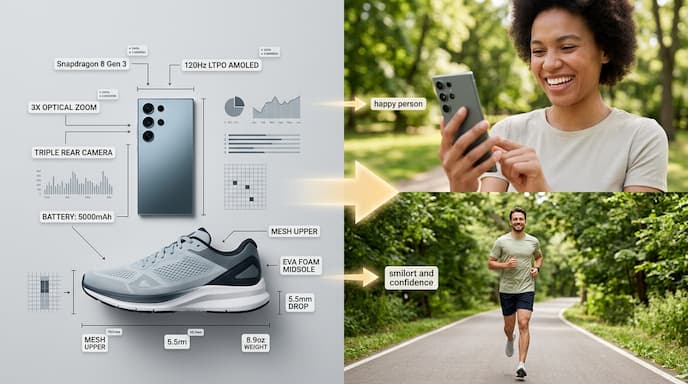
But what if you sell accounting software? Industrial fasteners? Air conditioning replacement filters? Term life insurance? Plumbing pipe insulation?
When marketers are tasked with selling unglamorous, everyday products, they frequently make one of two critical errors:
The first error is surrendering to boredom. They retreat into dense, jargon-laden technical specifications. They list dimensions, tensile strengths, operating temperatures, and compliance certifications, producing dry product copy that puts prospective buyers to sleep.
The second error is overcompensating with exaggerated hype. They load their copy with desperate adjectives: ‘revolutionary,’ ‘groundbreaking,’ ‘life-changing,’ and ‘magical.’ When a customer reads that a replacement toilet flapper valve will ‘transform their morning routine forever,’ their internal radar screams fraud. Trust is shattered instantly.
The truth is that there are no inherently boring products: there are only lazy angles.
Every product that exists in commerce was created to solve a genuine human frustration, prevent a costly catastrophe, or provide peace of mind. When you learn to connect functional utility to human emotion, even the driest product becomes compelling, fascinating, and irresistible.
In this instructional guide, we explore ten proven copywriting techniques to make unglamorous products sound exciting, engaging, and vital: without resorting to a single exaggerated claim.
Strategy 1: Dramatize the Hidden Cost of Minor Annoyances
People rarely think about utilitarian products until something goes wrong. Therefore, instead of trying to make the product sound thrilling, dramatize the microscopic friction that occurs when the customer does not have it.
Consider something as mundane as high-grade door weatherstripping. Describing the rubber compound and adhesive backing excites nobody.
Instead, describe the lived reality of an annoying draft:
‘That subtle, icy chill across your ankles while you are trying to relax on the sofa with a book. The quiet whistle outside your bedroom window on windy nights. The slow, silent leak draining thirty dollars off your utility bill every month.’
By bringing vivid sensory awareness to a minor, persistent irritation, you turn an overlooked functional commodity into an immediate, satisfying relief.
Strategy 2: Translate Specifications Into Real-World Consequences
A common trap in utilitarian copy is assuming features speak for themselves. Features only provide information; consequences drive buying decisions.
Whenever you are tempted to state a technical specification, apply the famous copywriter’s formula: So what?
- Feature: ‘This water heater features a dual-layer titanium ceramic heating element.’
- So what? ‘It heats water 40 percent faster.’
- So what? ‘You will never have to take a freezing shower again, even if three family members shower right before you on a Monday morning.’
Notice how the emotional payoff shifts from industrial metallurgy to the pure bliss of reliable hot water when you are running late for work. Never leave a technical specification hanging without connecting it directly to daily human experience.
Strategy 3: Reveal the Fascinating Origin Story (The Behind-the-Scenes Journey)
Legendary copywriter Claude Hopkins famously turned Schlitz Beer from the fifth-ranked brewery into the nation’s market leader not by claiming their beer was better than competitors, but by explaining the meticulous purification process. He described how beer was brewed in rooms with filtered air, filtered through wood pulp, and cooled in glass pipes. Every major brewer used similar methods, but nobody had ever told the public.
Behind almost every utilitarian product lies an astonishing world of engineering, obsession, and craft.
- Do not just say you make durable work socks. Describe how your textile engineers tested forty-two wool blends across 500 miles of mountain terrain to find the exact weave that prevents blister-causing friction.
- Do not just say your cloud backup software is reliable. Describe the subterranean server facilities with dual biometric locks and independent diesel power backups humming in cold vault silence.
When you reveal the invisible craftsmanship behind an everyday item, customers perceive immense value and respect the product on a deeper level.
Strategy 4: Reframe the Product as an Identity Anchor
Human beings rarely buy items solely for their utility; we buy items to reinforce who we believe we are, or who we aspire to become.
You can elevate any utilitarian item by anchoring it to a proud personal identity:
- A heavy-duty steel tool organizer is not a metal shelf: it is the hallmark of a master craftsman who takes immense pride in their workshop order.
- A high-yield corporate tax software is not a spreadsheet calculator: it is the secret weapon of the astute business owner who protects every dollar their company earns.
- A sturdy kitchen trash can is not a plastic bin: it is the centerpiece of a calm, hygienic, organized home where chaos has no place.
Speak to your customer’s professional standards, personal discipline, or domestic pride, and your product instantly becomes a symbol of their personal excellence.
Strategy 5: Use Unexpected, Vivid Analogies
When dealing with abstract, dry, or technical concepts, the human brain struggles to form clear mental pictures. Analogies act as cognitive shortcuts, bridging unfamiliar mechanics to intuitive concepts your reader already understands.
- Selling cloud data synchronization? ‘Think of it like an invisible twin sitting beside you at your desk, instantly writing down every word you type on a second notepad in another room.’
- Selling website caching tools? ‘Instead of cooking a fresh meal from scratch every time a guest walks into your restaurant, imagine having their favorite dish already perfectly plated under a warmer the second they sit down.’
A fresh, unexpected analogy cuts through technical fog and delivers an instant ‘aha’ moment that makes complex tools feel intuitive and exciting.
Strategy 6: Highlight the High-Stakes Insurance Value
Many seemingly boring products exist primarily as safety nets against catastrophic outcomes. When selling protective or preventive solutions, the excitement comes from the sheer scale of the disaster avoided.
Consider industrial surge protectors. Boring, right?
Until you reframe the stakes:
‘A lightning strike twenty miles down the road can send a 10,000-volt spike through your standard electrical outlet in four milliseconds, instantly frying your $4,000 home workstation, unrecoverable family photos, and active client project files. This small metal box stands between that power surge and everything you have built.’
Suddenly, that $60 surge protector feels like the most heroic, essential purchase your customer will make all month.
Strategy 7: Celebrate the Joy of Flawless Mundane Reliability
In a modern world filled with fragile gadgets that break, software updates that glitch, and flaky service providers who fail to show up, quiet, unshakeable reliability has become a rare luxury.
Celebrate the refreshing predictability of your product:
- ‘It does not connect to Wi-Fi. It does not require firmware updates. It has no subscriptions. You turn the solid brass knob, and it works every single time, exactly as intended, for the next twenty-five years.’
There is profound emotional resonance in items that do their job without drama, fuss, or attention-seeking complexity. Lean into the beauty of dependable simplicity.
Strategy 8: Leverage Micro-Specific Customer Testimonials
Generic praise (‘Great product, fast shipping!’) reinforces boredom. But micro-specific, storytelling customer reviews breathe vibrant life into the plainest merchandise.
Actively source and spotlight reviews that describe unusual, authentic situations:
- For heavy-duty zip ties: ‘I used these to temporarily hold my exhaust pipe together after hitting a raccoon on a remote mountain pass in Montana, and they held secure for 400 miles until I reached a repair shop.’
- For stain remover: ‘Removed red berry syrup from an heirloom white linen tablecloth five minutes before my in-laws arrived for Thanksgiving dinner.’
Micro-specific testimonials carry visceral credibility that no corporate copywriter can replicate on their own.
Strategy 9: Poke Gentle Fun at the Unglamorous Reality
Self-awareness is one of the most disarming tools in persuasive writing. When you acknowledge that your product is unsexy, you immediately win your reader’s trust through candor.
- ‘Let us be honest: nobody dreams about shopping for commercial floor drains. You will never see an influencer posing with one on Instagram, and your friends will never compliment you on your wastewater drainage choices.’
- ‘But when a torrential storm backs up city sewers and every basement on your block is underwater except yours, this unglamorous piece of cast iron will be your absolute favorite possession.’
Acknowledging the reality with good humor removes skepticism and positions your brand as an honest, no-nonsense ally.
Strategy 10: Focus on the Desirable After-State
Copywriters often spend too much time describing the product itself, and not enough time describing the emotional atmosphere that exists after the problem is solved.
Sell the relief, the quiet, the confidence, and the peaceful evening that awaits your customer on the other side of the purchase:
- Do not sell bookkeeping cleanup services: sell the calm feeling of closing your laptop at 5:00 PM on Friday, knowing your taxes are fully organized and you can enjoy your weekend without nagging dread.
- Do not sell ergonomic desk chairs: sell the sensation of standing up at the end of an eight-hour workday with zero stiffness in your shoulders, ready to play with your kids without wincing.
The product is merely the humble bridge. The destination is where the excitement lives.
Conclusion: Enthusiasm Is a Choice of Focus
Making an unglamorous product sound exciting does not require deception, gimmicks, or hollow exaggerations. It simply requires you to care enough about the user’s daily life to notice where the product makes a genuine difference.
Every product that solves a real problem has dignity, purpose, and value. When you dig beneath the functional surface, identify the hidden frustrations your customer carries, and show how your solution restores order, peace, or efficiency, your copy will never be boring again.