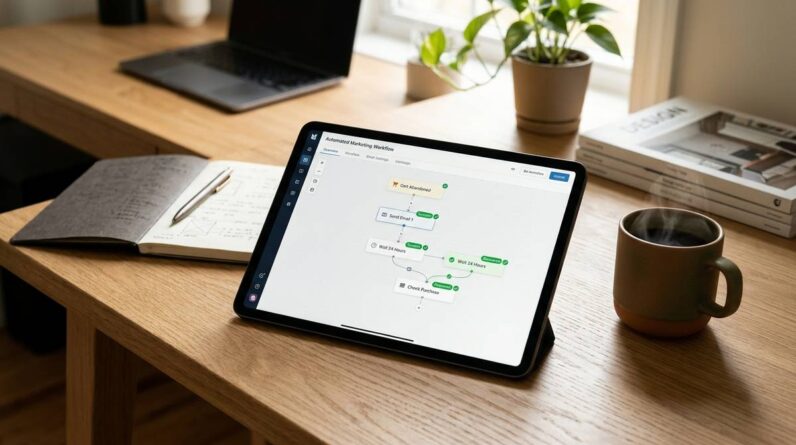
In the business world, the difference between struggling companies and wildly profitable enterprises rarely comes down to initial lead generation. Both types of businesses attract interested prospects who browse products, fill out inquiry forms, or even add items to their digital shopping carts. The defining difference lies in what happens next. Struggling businesses allow indecisive prospects to disappear forever, while successful brands operate systematic, empathetic follow-up sequences that systematically recover lost revenue.
Industry studies consistently show that over sixty-five percent of online shoppers abandon their shopping carts, and upwards of eighty percent of business-to-business sales leads require between five and twelve follow-up touchpoints before committing to a purchase. When you lack a structured follow-up email cadence, you leave the vast majority of your revenue on the table.
Recovering these sales does not require aggressive pressure or manipulative tactics. In fact, heavy-handed urgency often destroys trust. What works is a well-timed, value-centered sequence that addresses unspoken objections, provides helpful clarity, and removes purchasing friction. In this guide, we will walk step by step through designing, writing, and automating an email sequence that turns abandoned interest into completed sales.
The Psychology of Buyer Hesitation: Why Prospects Walk Away
Before writing a single subject line, you must understand why a prospect who expressed clear interest suddenly stopped short of buying. Consumers rarely abandon checkouts or ignore sales proposals out of malice. Almost every lost sale stems from one of four primary psychological barriers:
First, unanticipated friction and procedural confusion. The prospect intended to complete their transaction, but unexpected shipping fees appeared, the checkout form was cumbersome on a mobile device, or they could not find answers to a basic technical question. Rather than wrestling with the process, they closed the tab.
Second, fear of making a costly mistake. Buying triggers psychological resistance. Prospects wonder if the product will truly solve their problem, whether a better alternative exists, or if they will regret spending the money next week. Without reassurance, hesitation leads to inaction.
Third, everyday interruption and lost attention. Life happens. A phone call rings, a child needs attention, a meeting begins, or an internet connection drops. The prospect fully intended to return, but within twenty minutes, your offer was buried beneath daily distractions.
Fourth, unresolved specific objections. For service contracts and high-ticket products, prospects often have lingering doubts regarding implementation timelines, team compatibility, or contract terms. If your sales process does not proactively address these concerns, deals stall indefinitely.
The Architecture of a High-Converting Five-Part Recovery Sequence
A truly effective recovery sequence is not a barrage of generic “Are you still interested?” reminders. It is a progressive conversation that delivers distinct value at every stage. Here is a battle-tested five-email architecture designed to recover abandoned carts and stalled sales conversations.
Email 1: The Helpful Procedural Check-In (Sent 1 to 2 Hours After Abandonment)
The primary goal of your first email is simple: eliminate friction and address immediate technical hurdles while interest remains fresh. The tone must be warm, helpful, and completely free of sales pressure.
Assume that an everyday interruption or technical glitch occurred. Provide a direct, one-click link to restore their exact cart or review their customized proposal.
Key elements to include:
- A clear, friendly subject line that reminds them of what they viewed without shouting in all capital letters.
- Direct confirmation of the specific items, services, or proposal details they selected.
- A prominent, frictionless button to resume where they left off.
- An open invitation to reply directly to the email if they encountered technical difficulties or had a quick question.
Email 2: The Social Proof and Reassurance Showcase (Sent 24 Hours After Abandonment)
By day two, initial buying impulse has cooled, and analytical doubt takes over. Your prospect is asking themselves whether your solution actually delivers on its promises.
This email tackles skepticism head-on by showcasing authentic customer experiences. Rather than listing features, share a concise, compelling case study or a curated collection of reviews from customers who initially held the exact same reservations.
Key elements to include:
- A subject line highlighting a relatable customer transformation or common hesitation.
- A brief story of a customer who was hesitant about price or complexity, followed by the specific, measurable results they achieved.
- Highlighting your return policy, satisfaction guarantee, or onboarding support to neutralize perceived risk.
Email 3: The Unspoken Objection Buster (Sent 48 Hours After Abandonment)
If a prospect has not purchased after two emails, an unaddressed objection is holding them back. Email three addresses the most common hurdles directly and transparently.
Format this message as a conversational FAQ that answers the hard questions competitors shy away from: What happens if it does not fit? How much time does implementation require? How does this compare to cheaper alternatives? Are there hidden ongoing fees?
Key elements to include:
- A subject line signaling direct, honest answers to important questions.
- Three to five concise questions and answers covering your market’s top objections.
- A friendly reminder that your support team or sales engineers are available via reply or chat to discuss unique circumstances.
Email 4: The Value Add or Gentle Incentive (Sent 72 to 96 Hours After Abandonment)
Only after you have provided technical assistance, established social proof, and addressed core objections should you consider introducing an incentive. If you offer discounts immediately in email one, you train your audience to abandon carts intentionally to receive cheaper prices.
In high-end service businesses and premium retail, your incentive does not need to be a profit-draining price cut. Consider offering free expedited shipping, an exclusive implementation bonus, an extended support warranty, or a complimentary strategy audit.
Key elements to include:
- A clear presentation of the added bonus or limited-time incentive.
- Explicit explanation of who this offer is designed for and why you are extending it today.
- A defined expiration timeline that creates legitimate, respectful urgency without manufactured panic.
Email 5: The Respectful Permission to Walk Away (Sent 5 to 7 Days After Abandonment)
The final email in your recovery sequence is often the highest-converting message in the entire campaign. Known in sales circles as the “breakup email,” this message flips the psychological dynamic by politely releasing the prospect.
When you communicate that you will not clog their inbox with further follow-ups, prospect defensiveness drops. If they genuinely need your solution, the prospect of losing access or letting the conversation expire prompts them to make a final decision.
Key elements to include:
- A subject line indicating that you are closing their file or clearing their reserved cart.
- A courteous, professional acknowledgment that the timing might not be right for them today.
- A final, simple link to complete the purchase if they choose, along with an invitation to reach out in the future whenever their priorities align.
Crafting Subject Lines That Demand to Be Opened
Your follow-up email sequence is useless if recipients never open your messages. Strong follow-up subject lines avoid cheap clickbait and instead leverage relevance, personalization, and clarity:
Effective options for e-commerce and retail:
- “Did you leave something behind?”
- “Quick question regarding your order”
- “What our customers say about [Product Name]”
- “Here is what happens inside your first 30 days”
- “Should we hold your cart or release it?”
Effective options for B2B and professional services:
- “Notes on our conversation regarding [Project Name]”
- “Three questions clients usually ask before starting”
- “Case study: How [Client] solved [Specific Pain Point]”
- “Quick check regarding your proposal timeline”
- “Permission to close your file for now?”
Essential Technical Best Practices for Automated Sequences
To ensure your follow-up sequence runs smoothly and produces consistent returns, configure your automation system with these operational guardrails:
Implement precise exit triggers. Nothing damages brand credibility faster than sending an abandoned-cart recovery email to someone who completed their purchase ten minutes ago. Set your marketing automation software to automatically remove a contact from the sequence the instant a purchase or signed contract is registered.
Optimize for mobile readability. Over half of all follow-up emails are opened on smartphones while recipients are commuting, running errands, or between meetings. Keep paragraph lengths to two or three sentences, ensure body fonts are at least sixteen pixels, and make call-to-action buttons wide and easily clickable.
Monitor deliverability health. Track open rates and spam complaint rates closely. If your emails consistently land in promotional tabs or junk folders, audit your sender domain authentication records (SPF, DKIM, DMARC), cleanse inactive subscribers, and reduce image-to-text ratios.
Segment sequences by customer value. If your store sells both twenty-dollar accessories and two-thousand-dollar equipment, do not treat both prospects identically. Create a dedicated high-ticket sequence that introduces personal phone outreach or white-glove video assistance for premium buyers.
Turning Recovered Sales Into Long-Term Brand Advocates
When a hesitant prospect completes their purchase through a thoughtful follow-up sequence, your work is only half finished. These customers initially experienced real doubt, which means their post-purchase onboarding must be flawless.
Immediately transition newly converted buyers into a world-class onboarding sequence. Confirm their order instantly, provide transparent shipping updates or clear next steps for service delivery, and supply educational resources that help them achieve fast success. When you turn recovered buyers into delighted advocates, your follow-up system becomes not just a revenue safety net, but an engine of sustainable business growth.
Handling Discount Requests Without Diluting Margins
A common scenario in abandoned-cart recovery occurs when prospects reply directly to your follow-up sequence asking for a discount code or fee reduction. How you handle these requests determines whether you protect your brand’s pricing integrity or trigger a race to the bottom.
When prospects ask for price concessions, avoid immediate surrender. Slashing prices on demand signals that your initial price was inflated and teaches customers that your published rates are merely suggestions. Instead, employ the “Value Exchange” strategy.
If a prospect claims your service or product is slightly beyond their financial reach, offer an adjusted package that maintains your profit margin while satisfying their budget constraints:
Offer payment plan flexibility: Many cash-strapped buyers do not object to the total cost; they object to the immediate cash outlay. Splitting a $1,200 purchase into four monthly payments of $325 solves cash flow friction while preserving your total contract value.
Adjust the deliverables scope: Remove non-essential deliverables or secondary consulting sessions in exchange for a lower price point. When you demonstrate that lower pricing requires a corresponding reduction in service scope, prospects respect your professional boundaries.
Exchange pricing for favorable terms: If you agree to a minor price adjustment, require something of tangible business value in return, such as an upfront annual payment, a video testimonial upon project completion, or a non-exclusive case study rights agreement.
Checklist: 10 Questions to Audit Your Recovery Sequence Before Launching
Before activating your automated recovery workflow in production, review every message against this quality assurance checklist:
- Does every email have a mobile-responsive layout that reads cleanly on a five-inch smartphone screen?
- Are all recovery links pre-populated so the recipient returns to their exact cart or proposal without starting over?
- Have you verified that existing customers or purchasers are automatically excluded from receiving further abandoned-cart emails?
- Is your tone respectful, helpful, and empathetic rather than demanding or accusatory?
- Does the sequence feature at least two authentic customer testimonials addressing distinct hesitations?
- Are your sender name and email address recognizable as coming from a genuine human being rather than an unmonitored system bot?
- Have you tested every hyperlink, button, and unsubscribe mechanism across multiple email clients (Gmail, Outlook, Apple Mail)?
- Does your email copy comply with anti-spam legislation, including a valid physical business mailing address and clear opt-out options?
- Are you tracking open rates, click-to-open rates, and total attributed revenue specifically for this sequence in your analytics dashboard?
- Is your customer support team prepared to respond promptly to inbound replies generated by the sequence?